
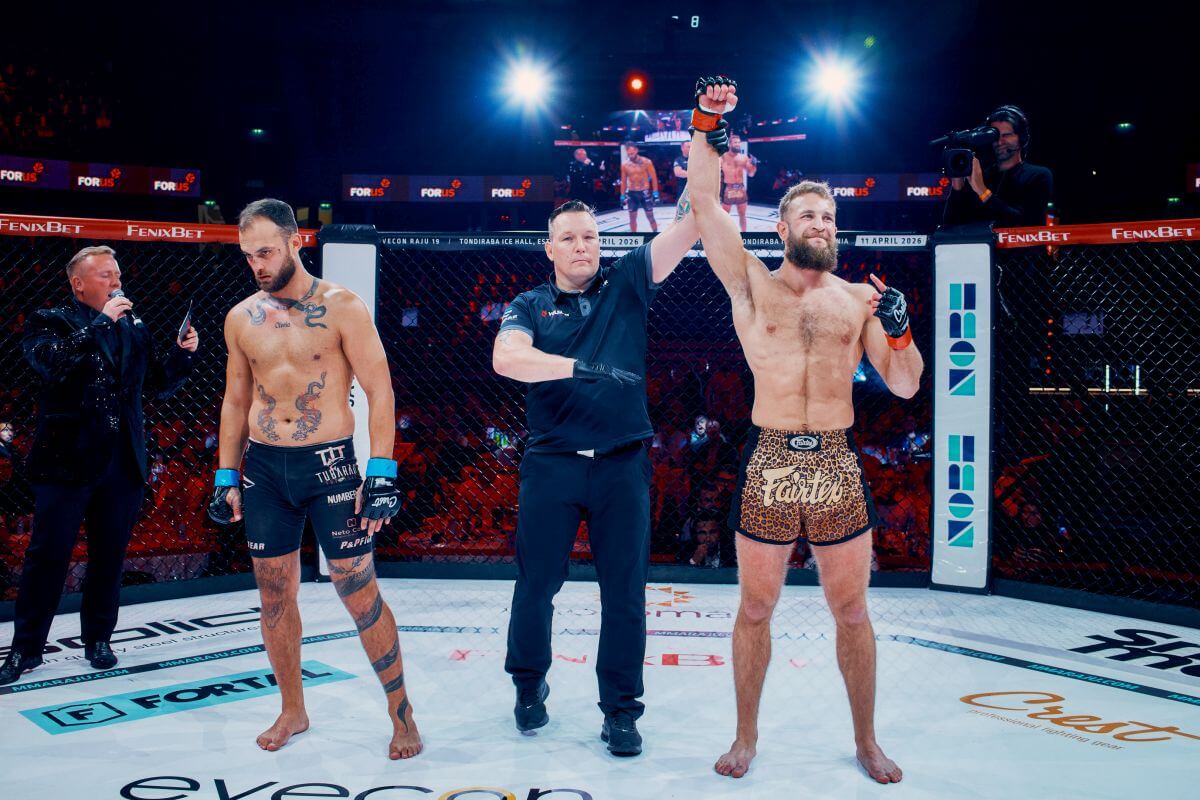

Allan Volosatõh is putting everything on the line at Evecon Raju 19: the goal would be an even faster knockout, but this opponent is a difficult one
Last autumn, one of Estonia’s most successful stand-up fighters, Allan Volosatõh, stepped into his first-ever professional MMA fight and defeated his opponent in the cage with a knockout in just 23 seconds. Now, on April 11 at Evecon Raju 19, he faces his next fight, which promises to be more challenging.
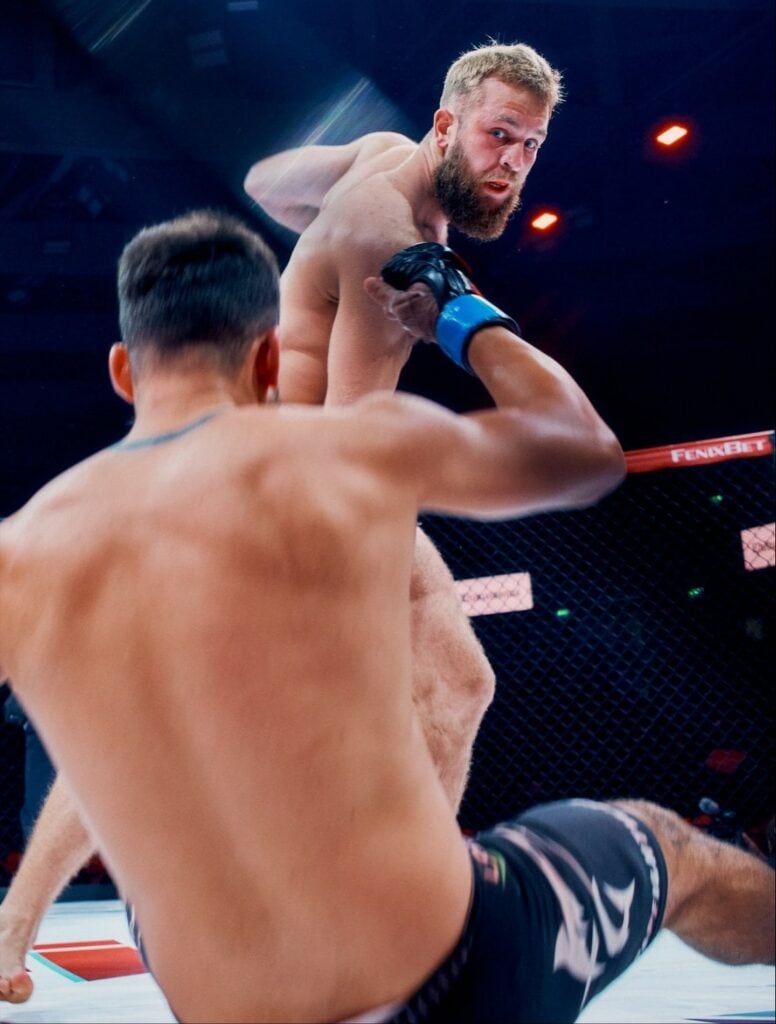
Photo (RAJU18): Allan Volosatõh vs Ion Chirilov
Combat sports did not enter Allan Volosatõh’s life as his first sport, although even as a child he wanted to engage in something with a lot of physical contact and where he could learn self-defense. Before starting Muay Thai, he trained in swimming for three years, then karate, and eventually joined the Garant sports club under his current coach Daniil Sapljošin.
Wrestled from a young age
“I felt that karate didn’t have everything I was looking for, and I managed to get his contact through a friend,” said Volosatõh. Sapljošin remains his main coach, and together they make all the important decisions. “If I need to learn something extra from someone during preparation, Daniil helps find the right people I can train with,” he explained.
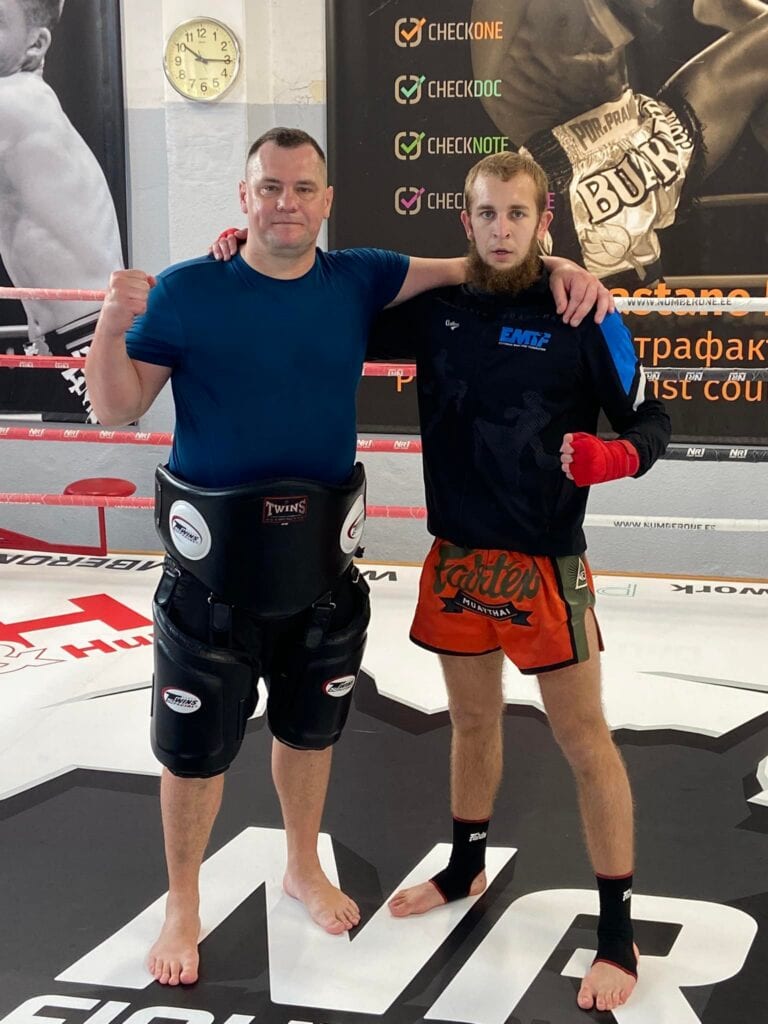
Photo (private collection): Daniil Sapljošin and Allan Volosatõh
He won his first competition at the age of 12, which was in wrestling. “When I first joined Garant, there was a wrestling coach in the club under whom I started practicing wrestling. By the time of that competition, I had been training for about half a year. After that came kickboxing competitions, but the first ones didn’t go very well. At first, I had to understand how everything works so I could handle different situations in the ring. As time went on, things started to improve,” Volosatõh recalled.
His first international competitions took place in the Baltic region, followed by larger international championships. One of his most notable achievements is the 2023 IFMA title, when he won two fights in Poland and became European champion.
“That was a big step forward for me. But also, winning the ISKA intercontinental champion title in 2025 meant a lot. I also remember an older competition in Saint Petersburg when I was about 13 years old. I won three fights there and took first place,” he said.
Experienced coach Daniil Sapljošin recalls that when Volosatõh joined him at the age of 11, he immediately stood out as an extremely hardworking athlete.
“I liked that he came to every training session and asked if we would do sparring that day. That was very nice. Allan is truly talented, but also very consistent and has strong character traits. His strengths are good boxing, strikes, and clinches,” said the coach. They have worked together for nearly 15 years, and according to Volosatõh, Sapljošin is like a second father to him.
According to the coach, victories do not always come easily. One difficult moment was the previously mentioned 2023 European Championship. “It was a very tough win that he ultimately secured, but when you work hard, the result is good. Every year it becomes more difficult to be the best at championships because we have many strong countries creating more competition,” Sapljošin explained.
Doing everything at once is difficult
Over the past year, the biggest challenge has been balancing work and sport. Finding time for training alongside work is not easy, and as a result, the athlete sacrifices sleep. When constant fatigue started to take its toll, Volosatõh realized that this was not beneficial for a top athlete, reduced his workload, and focused more on training.
“As an adult, it’s more difficult to align routines to train at maximum level. I remember when I worked full-time five days a week and at the same time had training from Monday to Saturday. Eventually, it all became too much because I was constantly tired and the training was no longer effective,” Volosatõh described.
“I slept on average five hours, because after a long workday I had late evening training sessions and went to bed around midnight, only to wake up before six in the morning. Now I have reduced the workload,” he added.
For the coach, this phase in an athlete’s career is not surprising. “I don’t like it, but I have often seen that when athletes become adults, they have to work hard because it is difficult to earn money in combat sports in Estonia. Usually, by the age of 17, they start studying and working more, and training takes a back seat,” Sapljošin said.
The MMA fight was a long-time dream
Taking on the challenge at Evecon Raju 18 on September 20 last year had been a long-time goal for Volosatõh, which finally became reality. Before the fight, he was not entirely sure how things would go.
“MMA is quite different from Muay Thai. For me, everything was new at first because I had to fight under MMA rules and the preparation for Raju 18 was not very long,” he admitted. Before his first fight, he trained and refined his striking, while also learning wrestling and defense.
“A lot also depends on the opponent. Generally, it’s a lottery because you don’t really know them until you meet in the ring. You can write anything about yourself in the introduction, but the truth comes out there,” Volosatõh noted.
Coach Sapljošin confirmed that in MMA, one strike is not always enough. “Allan’s strength is versatility, and ideally it’s better to finish the fight with a knockout before time runs out, but if necessary, you have to go the distance. You cannot rely on just one strike, and it’s important not to harm yourself,” said Sapljošin.
Nevertheless, his student finished his first professional MMA fight in the first round in just 23 seconds with a knockout against Ion Chirilov. “Everything happened so fast that I didn’t even have time to understand it. With just a couple of strikes, the result was secured. Mentally, I always prepare for a tougher fight because it’s better to be ready for a more difficult situation,” he recalled.
Volosatõh knew he had good striking, and the smaller gloves add a lot to boxing, meaning he doesn’t need to use excessive force. “I just managed to land the strike in the right place and saw how my opponent went down and signaled to the referee to stop the fight,” he added.
The matchup was made more challenging by the opponent’s weight advantage. “I came to the weigh-in tired and had already cut weight, so I felt a bit weak. Then I was told that the opponent was six kilograms overweight, while normally it’s around two. I had the option to withdraw, but that thought never crossed my mind. I had already prepared and had been waiting for this fight for a long time,” Volosatõh described.
His coach could not be present at the event due to other competitions but followed his athlete’s performance via live broadcast. “Daniil immediately wrote to me after the fight saying I did well and that he was very happy,” said Volosatõh.
He enjoyed the entire Evecon Raju 18 event, including the support from the crowd and fighting under new rules. Among other things, he also received the award for the best performance of the night at Evecon Raju 18, which motivated him to continue his MMA journey. “Of course, money and the prize were not the most important. For me, it is important to give one hundred percent,” he confirmed.
In October, he signed an exclusive contract with the Evecon Raju series, meaning that his future domestic appearances will take place in the MMA cage. Soon, April 11 will arrive, when he will face Norwegian fighter Steffen Rossevatn (2-1) at Raju 19 in Tondiraba Ice Hall. According to Volosatõh, he is a significantly more experienced opponent.
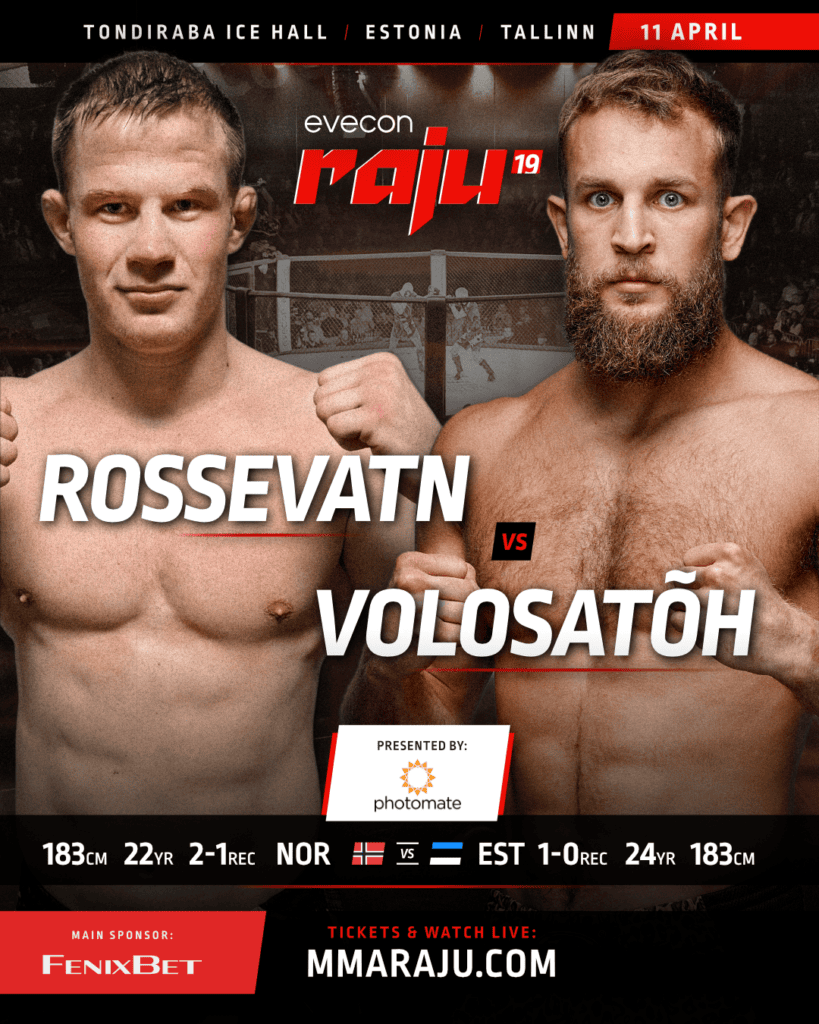
In the meantime, Volosatõh has focused mainly on MMA in his training, consistently practicing sparring, stand-up fighting, striking technique, defense, and wrestling. He also competed in an amateur tournament in Latvia to gain more MMA experience. “Let’s be honest, I didn’t gain much experience in those 23 seconds. In Latvia, I took first place and had two fights in one day. I won the first by points and the second by submission,” he said.
Volosatõh has watched the Norwegian’s fights. “He is a tough opponent. Both my coach and I know what I need to learn and how to prepare,” he said.
Does he hope to be faster than 23 seconds this time? “Ideally, a faster result would be great, but I think it will take more time. I will probably have to wrestle with him and give everything I have to win,” he explained.
Combat sports shape mindset
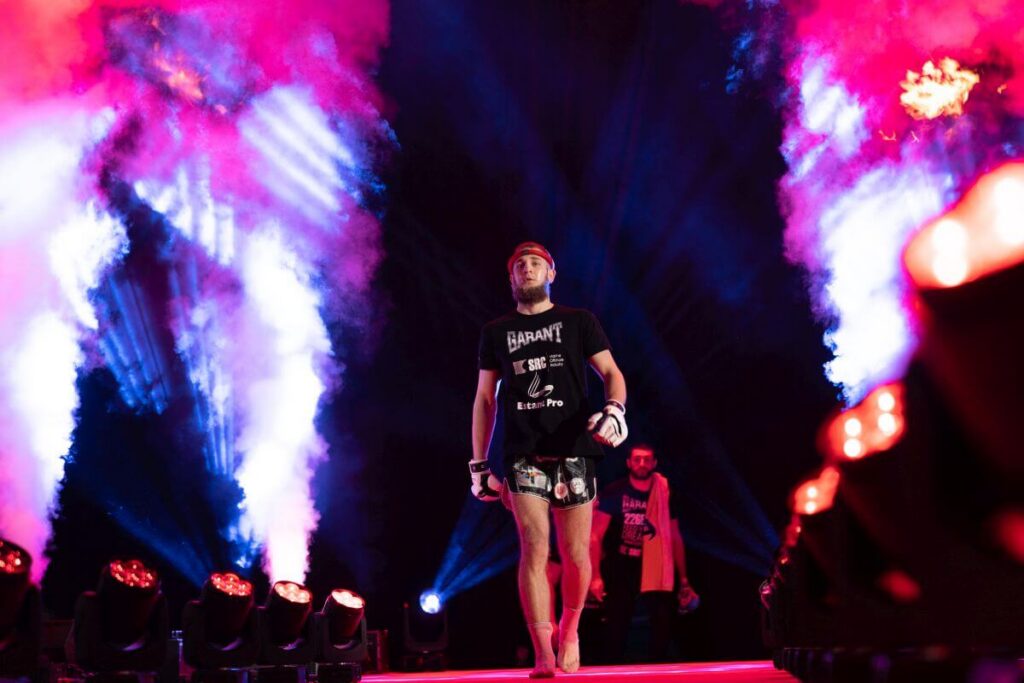
Photo (Dmitri Averjanov): Allan Volosatõh vs Onni Haapala
Combat sports have changed both of their lives and influenced their mindset. Volosatõh points out that he has learned to deal better with discomfort. “When you are tired during training, you keep going and don’t give up. That’s what it has taught me – never give up,” he said.
According to Sapljošin, the mental aspect is the most important in combat sports. “The most important thing is to think about what you are doing in the ring and the cage and to understand how to train correctly. Everything starts in the mind, and sometimes I have seen Allan mentally tired and given him time to take a break,” he explained.
For the experienced coach, combat sports have taught that in life you have to fight for everything. “To achieve something, you have to work for it, and nothing simply comes to you,” he confirmed.
“As for Allan, I believe he has several strong years ahead as a top athlete, and in the future he could become a coach if he wishes. We have also considered starting our own club, but time will show what happens,” said Sapljošin.